Securing your first job is an exciting milestone. It signals independence, growth, and financial opportunity. But if you have not figured out how to stay (or get out of) debt and create healthy financial habits, this can be tricky. For many young professionals, this stage in life can also bring unexpected financial pressure.
In this post, we share practical steps from Investec’s Everything Counts podcast and article on debt management tips, as well as wisdom from behavioural finance expert Morgan Housel’s best-selling book, The Psychology of Money (available for sale on Takealot and at all major book shops).
Why Do Young Professionals Encounter Debt?
Moving into full-time employment often comes with tempting offers:
- Credit cards
- Store credit accounts
- Overdraft facilities
- Buy-now-pay-later possibilities
These can all sing a hard-to-resist siren song that gets you into debt faster than you can get out again, especially when you still have to learn budgeting skills with your new income.
Housel points out another trap known as “lifestyle inflation”. When income increases, spending often increases, too. Promotions and social media feeds can cause you to upgrade beyond your means, leading you to get a bigger apartment than you can really afford or a top-of-the-range car rather than something more sensible.
As Housel notes, “Someone driving a $100,000 car might be wealthy. But the only data point you have about their wealth is that they have $100,000 less than they did before they bought the car.”
True wealth is actually in the money you save or invest, not what you display. The flashy lifestyle you may see around you often signals a person in debt, not someone who is actually wealthy. Real wealth is often what you can’t see, like property investments or savings plans.
How to Get Out of Debt and STAY out
1. Face Your Finances Head-On
Investec emphasises the importance of not ignoring bank statements or important collection calls. Avoidance exacerbates anxiety and prolongs the issue.
Pull your credit report history and create a list of:
- Every account in your name
- The balances owed
- The interest rate
- Your home loan repayment terms (Source)
Having clarity reduces fear and allows you to act strategically and calmly to get out of a debt hole. There are useful credit score-tracking apps like ClearScore that keep a digital record of your credit score and log it monthly. Understanding your debt position is critical if you want to learn how to get out of debt safely.
View our handy blog post that explains more about what a credit score is and how to improve your credit score.
2. Prioritise High-Interest Debt
Investec recommends paying off high-interest debt first while continuing to make minimum payments elsewhere. This reduces long-term interest costs. (Source)
Housel points out that “how you behave is more important than what you know.”
You may grasp interest rates well. However, if you aren’t disciplined about follow-through, nothing will change for the better.
Making small, steady repayments builds momentum. And similar to property investing, progress compounds with time.
PRO TIP: If you are not already in debt or have your payments under control, then start saving and investing in income-generating assets like property. Then compounding works FOR you instead of against you!
3. Create a Sustainable Budget That Protects “The Gap“
Housel says that saving is the gap between your ego and your income. A budget you can follow protects that gap. Budgeting for young professionals is hugely beneficial.
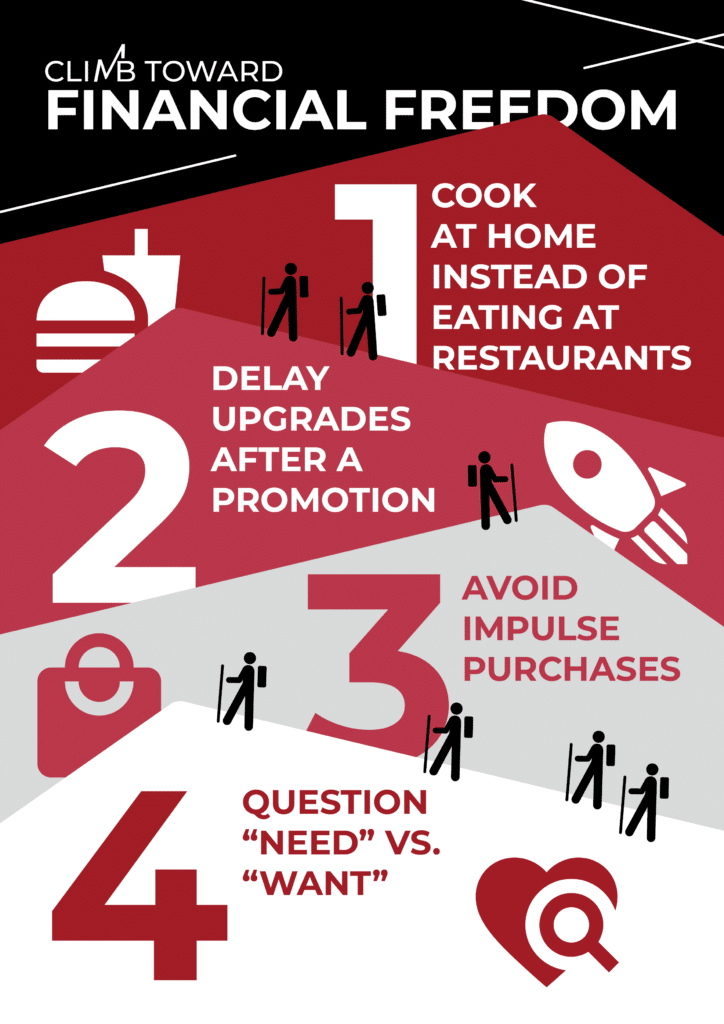
For example, according to Housel, it is important to have the discipline of:
- Cooking at home instead of eating at restaurants
- Delaying upgrades after a promotion
- Avoiding impulse purchases
- Questioning whether you truly “need” something or if it’s just something you want
Over time, these daily choices lead to financial freedom.
4. Automate Your Savings Before Lifestyle Inflation Creeps In
Housel notes that money’s greatest value is your freedom to choose what you do with your time, who you spend it with, and for how long.
Automating savings encourages further positive behaviour, such as:
- Increasing your debit orders when you receive a raise
- Allocating a portion of your salary increase into your savings account immediately
- Treating savings as if they are a fixed expense
If you do not see money readily available to you, you are less likely to spend it. Automating your payments protects you from overspending and living outside of your means.
The same is true with property investments. You can reduce the amount of your bond repayments and compound the value of your equity over time by reinvesting rental income surplus.
5. Manage Your Home Loan Well
For many young professionals, a home loan is their largest financial commitment.
Your home loan repayment should leave wiggle room for:
- Daily living expenses
- Allocating some of your income as savings
- Unexpected emergencies
- Interest rate fluctuations
If your home loan repayments feel unsustainable, speak to your lender sooner rather than later. Restructuring from a 20-year to a 30-year term can reduce pressure. Also remember that investment properties can be far more beneficial than owning your own home when you are young and likely to move around for a while as you change jobs or find a life partner, for instance.
To note: If you took out your home loan via IGrow Home Loans, our bond originators can help you get a handle on your affordability and a realistic, manageable home loan repayment amount. IGrow’s bond originators can negotiate with your bank on your behalf to restructure and re-negotiate a home loan repayment term that is more realistic for you, with the best interest rate available. Typical home loan terms are 20 or 30 years.
Contact IGrow’s bond originators if you are an IGrow investor, and let’s talk more about home loan terms, and then optimise yours. If you are a beginner investor, IGrow Home Loans will negotiate the best home loan terms on your behalf.
View our insightful blog post that compares a 20-year home loan term to a 30-year term and outlines the pros and cons of both.
6. Close Paid-Off Accounts and Reduce Temptation
Once debt is settled, close unnecessary credit accounts.
Housel argues that your environment shapes your behaviour. Limiting access to credit facilities reduces the chance of impulsive decisions or purchases. Instilling financial discipline becomes easier when temptation isn’t there.
If you really want to keep a credit card open to increase your credit score, always use it as little as possible and pay off the full amount owed each month.
7. Ask Smart Questions Before Taking on New Debt
Investec Credit Risk Consultant Lehlogonolo Ramushu suggests asking:
- Do I need this, or do I just want it?
- Can I live comfortably after paying this off monthly?
- Is this debt helping me grow financially?
- Do I fully understand the long-term costs? (Source)
Debt that consumes a large portion of your salary leaves no room for unexpected expenses. When 70 to 80% of your income goes toward home loan repayments, even a small emergency can push you back into borrowing, and the debt cycle restarts (Source).
Her second-last point is also important. There is leveraged debt used wisely to finance property investment, so you can grow wealth-generating assets where your debt will decrease with inflation, but your rental income will increase, so you end up in a stronger position. Then there is debt used just to fund a fancy lifestyle, which makes you poorer over time. Learn the difference, and you can end up financially free and wealthy, not poor and stressed by debt.
Conclusion
Understanding how to get out of debt and stay there is not about mastering complicated financial strategies. It is about consistent, rational financial behaviour.
Take heart from Morgan Housel’s encouraging point that discipline, not brilliance, builds your financial stability and eventual financial freedom.
Having all the financial knowledge in the world at your fingertips won’t help if you don’t have the discipline to live below your means.
Young professionals situate themselves to be financially independent if they adopt these measures:
- Track spending honestly
- Protect the gap between ego and income
- Automate savings
- Manage their home loan repayments wisely
- Make small, smart daily decisions
With the right planning in place and the right property investment strategy from the IGrow team, debt becomes more manageable and strategically oriented, enabling you to position yourself for success.
Contact a property investment strategist today, and let’s get you into a space where your property investments create reliable passive income for you in the long term and set your hard-earned salary to work!